Three centruries of Annapolis, in plain English
The story of inequality in Annapolis is older than our city’s charter. This page is not a long, window-down history of darkness — or triumphs. It’s a straightforward look at the systems, decisions and opportunities that shaped this place for the people who want to know it, how it still shapes daily life, and why it still matters.
UpFrom is a giving platform.
So why a history page?
Because every honest answer to “why Annapolis?” lives in the historical record. We could avoid our city’s past and pretend the gaps we see are new. But to fix what never starts, the quickest path to change is clarity — not comfort. So we’re here for you. The longer story — and the why — matters so people can see where we’ve been, and choose where we go.


The numbers don't lie
Annapolis was a waterfront port. Work and land flowed to a very few. By 1706, it became the provincial capital of Maryland and seat of the Province, with a small elite of landowners and merchants. Enslaved people were both forced labor and property. The model was connection and control to one side: the Lords, planters and traders; to the other our labor and lives.
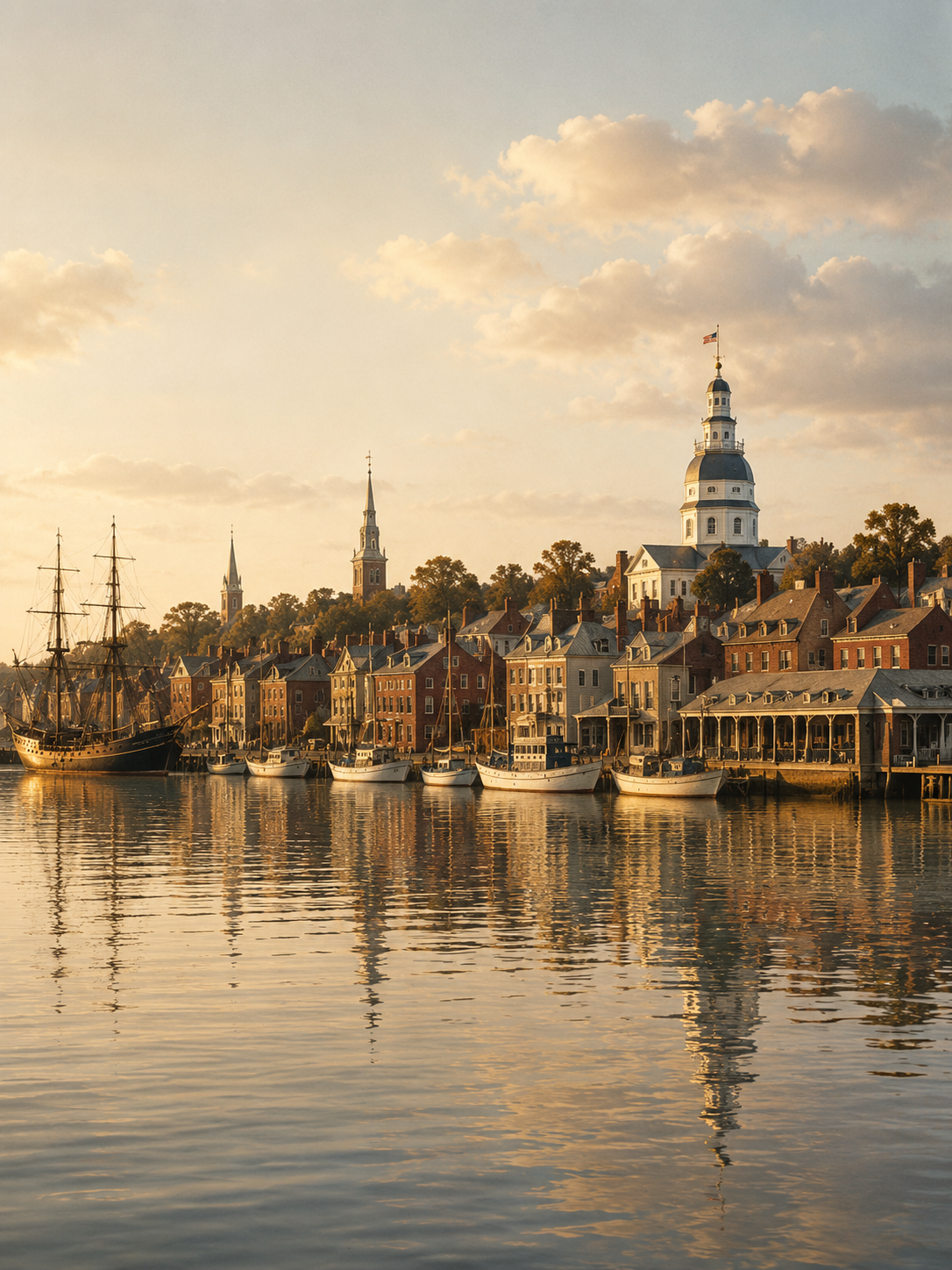
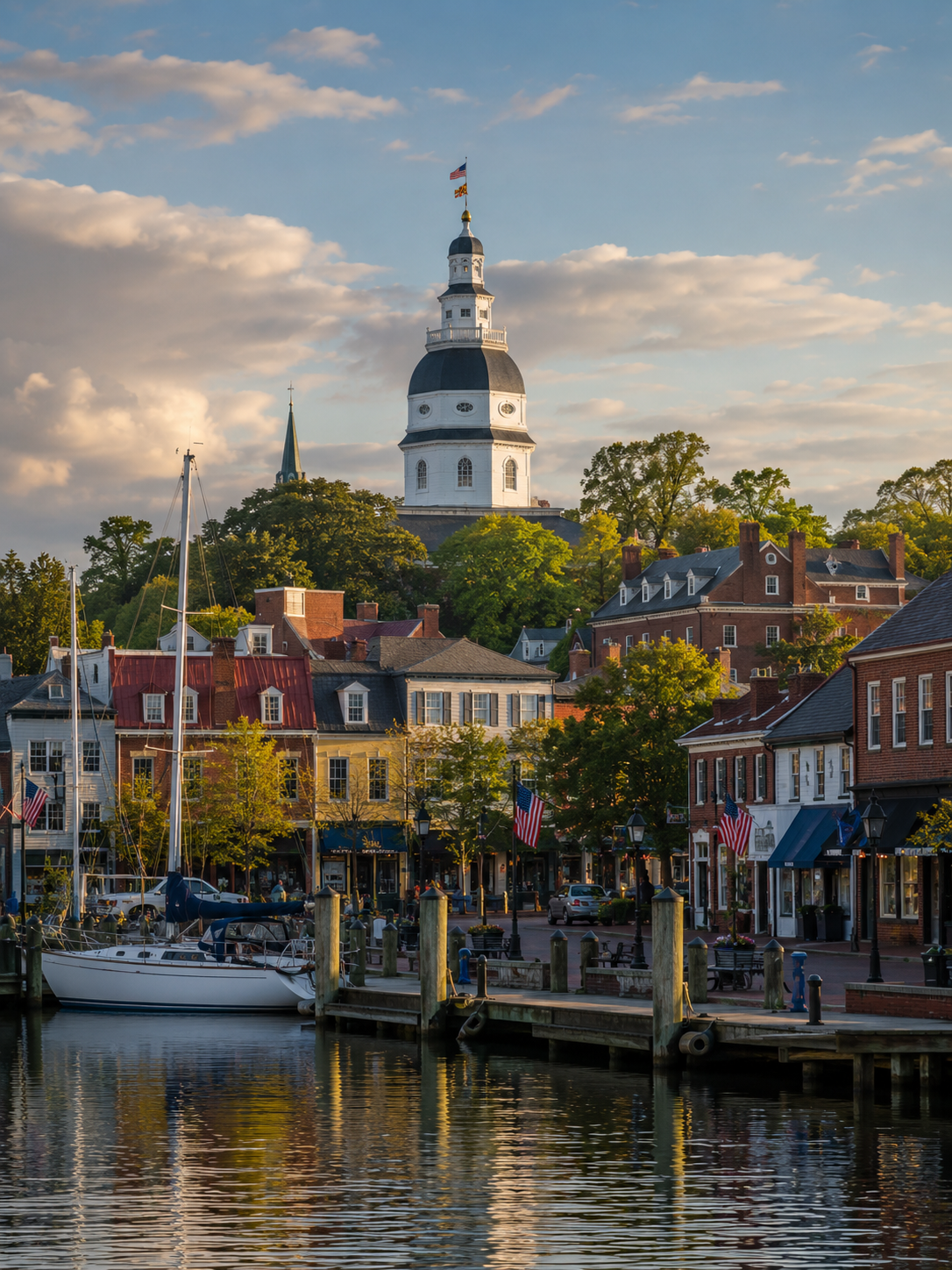
The wealth that built the city.
Land and labor created enduring wealth for a few, not for the many. That wealth is traced into generational investment and institutions that still shape who gets access and who does not.
Tidewater estates & plantations
Large landholdings and enslaved labor created generational wealth for a small number.
Why it built wealth
Ownership of land, people and credit compounded over generations. Access to courts, contracts and capital was not equal.
Cash & brick
Profits funded banks, churches, schools and civic institutions that carried advantages forward into today.
What got built anyway
Annapolis didn’t just grow — it invested. From 1684, tax laws embedded advantages into land and labor across generations. Investments in 3 key areas built wealth for some and kept others out.
Hallowed brick
Funded elite schools, churches, andinstitutions of power. A narrow few hadaccess. Most were excluded.
Why it built wealth
Tax privileges, land grants and credit access created a financial runway for some —not a level field.
Civic boost
Infrastructure and institutions in Annapolislocked in advantages that still echo inopportunity gaps.
When policy stopped being passive
The city moved from “let it be” to “system on purpose.” Housing moved from public to private. Capital moved to a few. Black families were pushed out, schools underfunded, and the rules wrote inequality in.
Red lines
Maps and mortgage rules restricted whereBlack families could buy, live and build wealth. Value was excluded by design.
U.S. housing segregation
Federal policies backed discrimination in lending and housing. Deeds, CC&As and HOAs kept Black families out of opportunity.
City "fixes"
“Urban renewal” erased neighborhoods and businesses. Public investment flowed to whiter areas — not where people lived.
The concentration of inherited poverty.
The blocking didn’t stop. Over many decades, ZIP codes kept people locked out. Redlined areas had less investment. Public schools had less per-student funding. Wealth gaps grew. Today, Annapolis carries one of the widest income gaps in the state — insulated and protected by policies that compounded over generations. We fix systems — not the effects.

A second story, on the same terms.
From the 1600s to now, Annapolis’ darker record is a greener page shaded in writing: created here. Black leaders, abolitionists, teachers, and churches sustained family, care and business. They built in this city, loved in this city, and kept moving it.
The result, in five numbers.
Widest gap in the state
~$44
~1,600
3 blocks
21% ↔ 12%
Behind the numbers are real families, real choices and lost futures. Naming this is how we make change real.

UpFrom is the latest entrant in a long civic effort
Our role today is Annapolis, working as a city through trusted partners, across ZIP codes, up and down Riva Road, Laureate Street to Bates and West. We are here to add tools and sustained motion to push more will into care and opportunity first where they’re needed most.
Scholarships and community capital for Black high achievers.
Tells our people’s story and keeps it alive.
Mentoring young men and opening paths ahead.
Connecting our children to education and employment.
Workforce access and training programs.
Tools and mentors for first-generation college students.
Grants and teacher support to reduce barriers and raise voice.
Rooted faith. Rooted service. Building trust and opportunity together.
These efforts didn’t create the problem — but they are part of the solution. We exist to listen, learn, align and help move more resources where they’re needed most.
If you want to verify any of this yourself.

Maryland State Archives — land grants, patents, tax records
Annapolis Deeds & Wills — AACC, circuit, titles
U.S. Census Data & Maps — historical and current
City of Annapolis records — zoning, budgets, reports
Housing Authority / HUD data & maps — redlining archives
U.S. Bureau of Labor Statistics & Census — income andemployment by race
Anne Arundel County & State — school funding and enrollment
Public / historian archives — The Maryland Gazette, newspapers and library collections
Reports: Sloan Commission; Kiana Blue Ribbon; Progress Annapolis; Community Data Dashboard
The model is the moment
History shows us the pattern that shapes transparency, and what this city has been waiting for. The history is heavy. The model is not.